Summary: Wuling Bingo has now passed 800,000 cumulative sales, and the brand is accelerating exports rather than treating them as an afterthought. That scale matters for fleet buyers: proven volumes mean lower unit costs, mature spare-parts supply, and enough real-world data to judge durability. Here's what the milestone signals for budget-sensitive importers.
What 800,000 Sales Actually Means
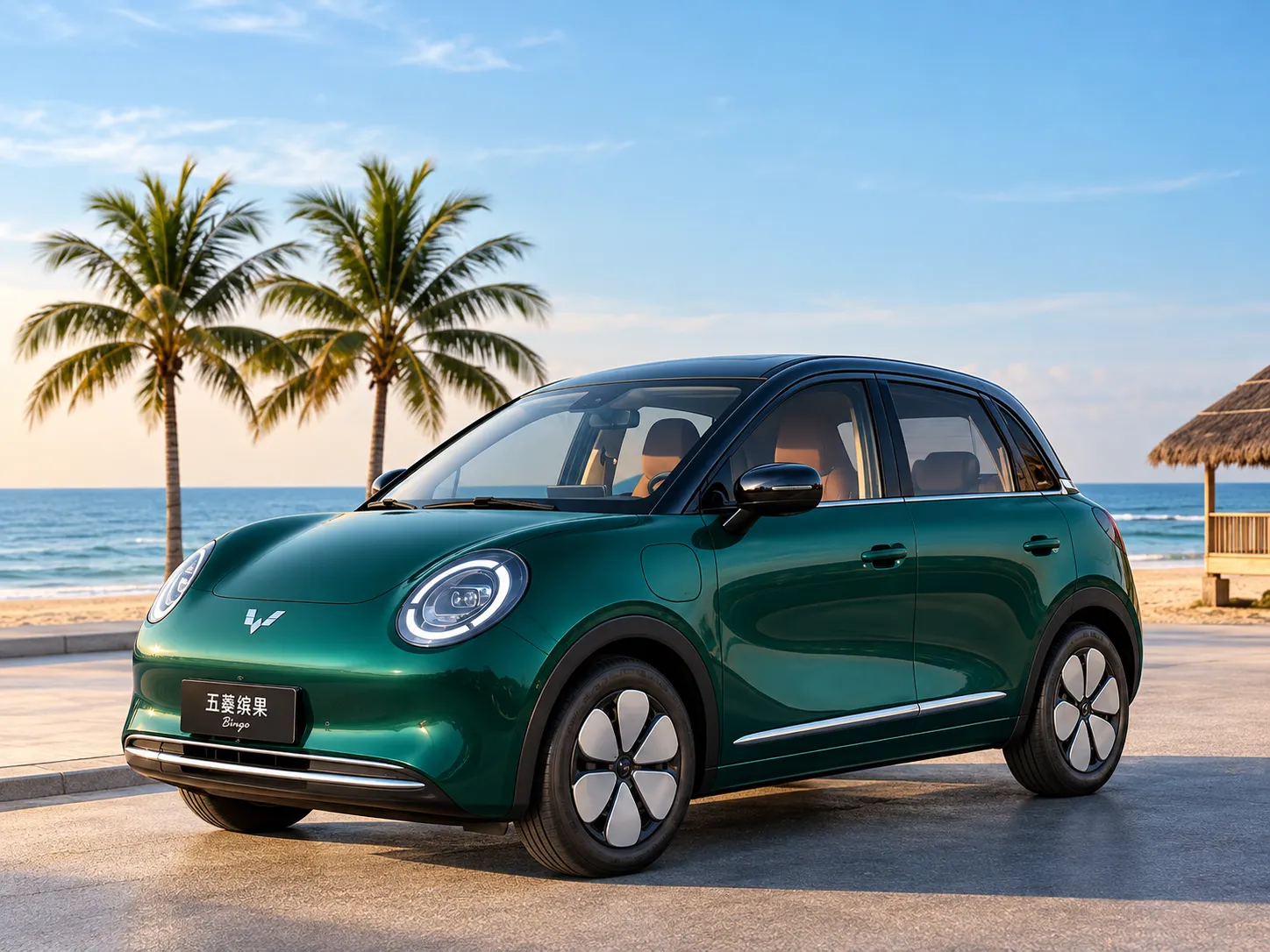
On October 22, SAIC-GM-Wuling confirmed the Bingo family crossed 800,000 cumulative sales since the first model launched in 2023. The lineup now spans the original Bingo and the larger Bingo Plus. For a company that built its name on the ultra-cheap Wuling Hongguang MINI EV, this is a different signal entirely.
The number is not marketing noise. It is a volume proof point.
A model that moves 800,000 units in roughly three years has worked through its teething problems. Production is mature. Supply chains are running at steady state. That is exactly what a fleet buyer should want — a vehicle whose early defects have already been found and fixed, not one where your customers become the quality-control department.
What this means in practice: parts are in stock, not on a six-week lead time. That is the difference between a fleet that stays on the road and one parked waiting on a shipment from Shenzhen.
Why Small EVs Fit Fleet Economics
Fleet managers do not buy cars. They buy cost per kilometre, projected over five years. A compact EV priced near the bottom of the segment wins that math for a simple reason: the entry ticket is low enough that residual value becomes a secondary concern.
Here's the thing about small Chinese EVs. Their total cost of ownership works even in markets where electricity is cheap and fuel is expensive — which describes most emerging import markets. A Wuling-class car consumes a fraction of the energy of a 1.5-litre sedan and has far fewer moving parts to maintain. Brakes, coolant, oil changes — all shrink.
That said, the real savings are upfront. A budget-sensitive importer can land a small EV for a wholesale price that leaves room for duty, freight, and local margin — and still undercut a used ICE competitor. One distributor in West Africa we worked with priced a compact EV fleet 20% below the equivalent five-year-old gasoline model after all-in landed cost. The fleet sold out in weeks.
Yet the economics only work if the vehicle is actually legal to register. That is where most first-time importers stall.
The Export Push Behind the Milestone
The official statement is blunt: SGMW says the Bingo family is "accelerating global layout" and positions it as the lead product for overseas expansion. This is not a domestic story. It is a channel strategy aimed at importers like you.
Why now? China's domestic EV market is crowded and price-competitive. Brands looking for margin turn to export markets where small, affordable EVs are still scarce. For an importer, that means a product with manufacturer-level export support — homologation documents, English-language manuals, and parts catalogs — rather than a gray-market car sourced through a trader.
Still, support quality varies. The difference between a genuine OEM-backed channel and a middleman is whether you get the UN R100 battery test report, the certificate of conformity, and the VIN-stamped homologation paperwork on the first request. Seasoned importers always ask for these before wiring a deposit.
What to Verify Before You Import
Every market has its own gate. A vehicle that clears Colombian homologation in three months can sit in a Kenyan port for eight because the paperwork set is different. The rules matter less than the process.
From real shipments, here is the checklist that separates smooth imports from demurrage bills:
Battery certification. Most import regimes now demand UN ECE R100 (battery safety) or an equivalent. Ask for the test report before the container is booked.
Type approval vs. individual inspection. Some countries accept the China CCC certificate with translation; others require local type testing. Budget the difference.
Charging standard. Chinese EVs ship with GB/T charging ports. Markets on CCS2 or CHAdeMO need an adapter or a port retrofit — a small part that can delay a whole fleet.
Right-hand-drive markets. The Bingo family is left-hand-drive. Importers in RHD markets either wait for a factory RHD variant or move on.
A dealer in Lagos told us the single biggest delay on his first EV import was not the car — it was a missing battery-test translation that held the shipment at customs for six weeks. The car was fine. The paper cost him more than the freight.
The Real Cost Structure
Landed cost is what a fleet buyer should model, not FOB. A rough breakdown on a small EV import looks like this:
| Cost component | Typical share of landed cost |
|---|
| FOB vehicle price | 55–65% |
| Ocean freight (RoRo or container) | 8–14% |
| Import duty | 5–35% (varies by market and powertrain) |
| VAT / sales tax | 10–18% |
| Port, clearing, and inland logistics | 5–10% |
The powertrain split is the lever. Several markets now tax EVs at a fraction of the ICE rate precisely to attract affordable mobility. A small EV often lands cheaper than a same-size gasoline car even before fuel savings are counted.
That said, quote the all-in number early. A freight forwarder who quotes ocean freight without terminal handling, customs brokerage, or port storage is handing you a number that will be wrong the day the ship docks.
Where Importers Get Delayed
Delays cluster in three places, in our experience. First, documentation — missing or untranslated certificates are the most common single cause of port holds. Second, charging-port mismatch, which turns a clean delivery into a retrofit project. Third, insurance and liability wording on fleet contracts, which trips up buyers who treated a commercial purchase like a retail one.
The reality is that none of these are about the car itself. The vehicle is usually the least of the problems. The process around it is what burns time and money.
What this means in practice: work with an exporter who has already shipped to your market, not one who is learning the route on your container. That one decision removes most of the variables above.
FAQ
How much does a Wuling Bingo cost at wholesale?
Pricing moves with trim, battery size, and order volume. Small EVs in this class sit near the bottom of the wholesale car price ladder, which is exactly why fleet buyers use them as an entry product. A china auto exporter will quote landed cost only after confirming your market's duty and homologation path.
Is the Wuling Bingo available outside China?
Yes — SGMW has named the Bingo family a lead export model and is expanding distribution. Availability and specification vary by market, so confirm whether you are getting a left-hand-drive export spec and factory export paperwork before committing.
What homologation does a Chinese small EV need?
It depends on the destination. Most markets require battery certification (UN ECE R100 or local equivalent), plus either type approval or individual inspection. Request the battery test report and certificate of conformity before the vehicle ships.
Can small EVs work for ride-hailing or delivery fleets?
Yes, and that is where they earn their keep. Low energy cost and minimal maintenance suit high-utilisation fleets. The catch is charging infrastructure and range planning — a small EV is a city tool, not an intercity workhorse.
What is the MOQ for importing Chinese small EVs?
MOQ varies by supplier. Some vehicles exporters work container quantities (2–4 units); others prefer RoRo shipments of larger blocks. Tell the exporter your target volume and market early so they can shape the quote around real logistics rather than a guess.
How do I find a reliable china auto exporter?
Look for one that has already shipped to your market, can produce homologation documents on request, and quotes all-in landed cost rather than FOB alone. That is the difference between a supplier and a middleman — and it is covered in the section below.
Sources
SAIC-GM-Wuling official announcement — Bingo family cumulative sales exceed 800,000 (October 22, 2026), reported via AutoHome. [Link]
UN Comtrade — vehicle export trade data for China. Link
CCCME / CATARC《出口商品技术指南》— export commodity technical guidance for motor vehicles. [Link]
UNECE — UN Regulation No. 100, electric vehicle battery safety. Link
About Zacarmate
Zacarmate is a China auto exporter focused on fleet and wholesale supply for overseas dealers and distributors. We ship the models that win on total cost of ownership — small EVs included — with factory export paperwork, verified homologation documents, and honest all-in landed quotes.
What we do: source, inspect, and ship Chinese cars for fleet buyers, from small EV entry models to larger volume runs. MOQ: flexible from a few units to full RoRo loads. Coverage: major ports across Asia, the Middle East, Africa, and Latin America. Promise: you get the battery test report and certificate of conformity before the container is booked — not after it is held at customs.
Ready to price a small EV fleet for your market? Contact our export team for a tailored wholesale quote.
Zhongan TikTech (Anhui) Co., Ltd.
Zhongan TikTech (Anhui) Co., Ltd., a Conch Group SOE, exports quality new & used vehicles globally with 40+ years' foreign trade expertise.
 EN
 fr
 es
 ru
 pt